
THE SITUATION

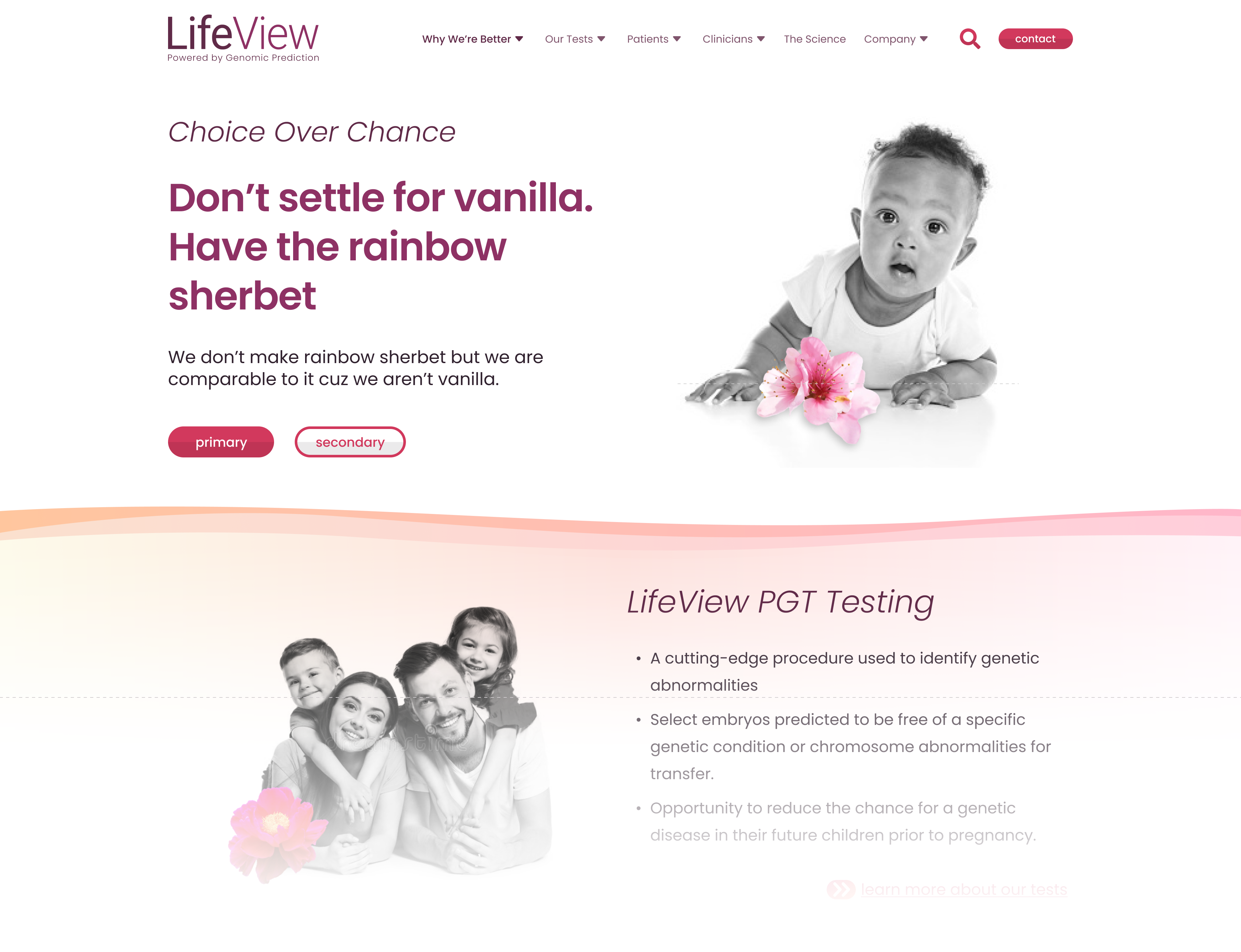
The Ask: Change the current website for Genomic Predictions Clinical Laboratory's testing platform, LifeView.com, so it is more visually consistent and easy to navigate.

The Problem Defined: Their current site was the result of different stakeholders making changes and additions to the site without any strategic vision or set of design principles to guide their decision making. The site didn’t have a well defined audience nor measurable goals to judge its effectiveness.
The Goal: Establish measurable business goals and well defined end users based on qualitative data gathered using several UX methods and then planning and executing a purposeful website that is built upon those goals and needs.
THE RESPONSE
Design was given the opportunity to research the problem and define the path forward, but first we had to deal with these major challenges:
__•_Limited to no ability to gather primary research from end users.
__•_Confusing relationship between the branding of Genomic Prediction Clinical Laboratory and its testing platform product, LifeView.
__•_Two separate audiences (patients and clinicians) with very different needs, understanding and emotional connection to our product.
A Customizing a UCD Plan
1. Product Vision
I had the business put their thoughts down into a Product Vision to help them define what they wanted from a new website.
2. Stakeholder Interviews
Gathering unique perspective on how the current site addresses the needs of our patients and clinics.


3. Needs Statements
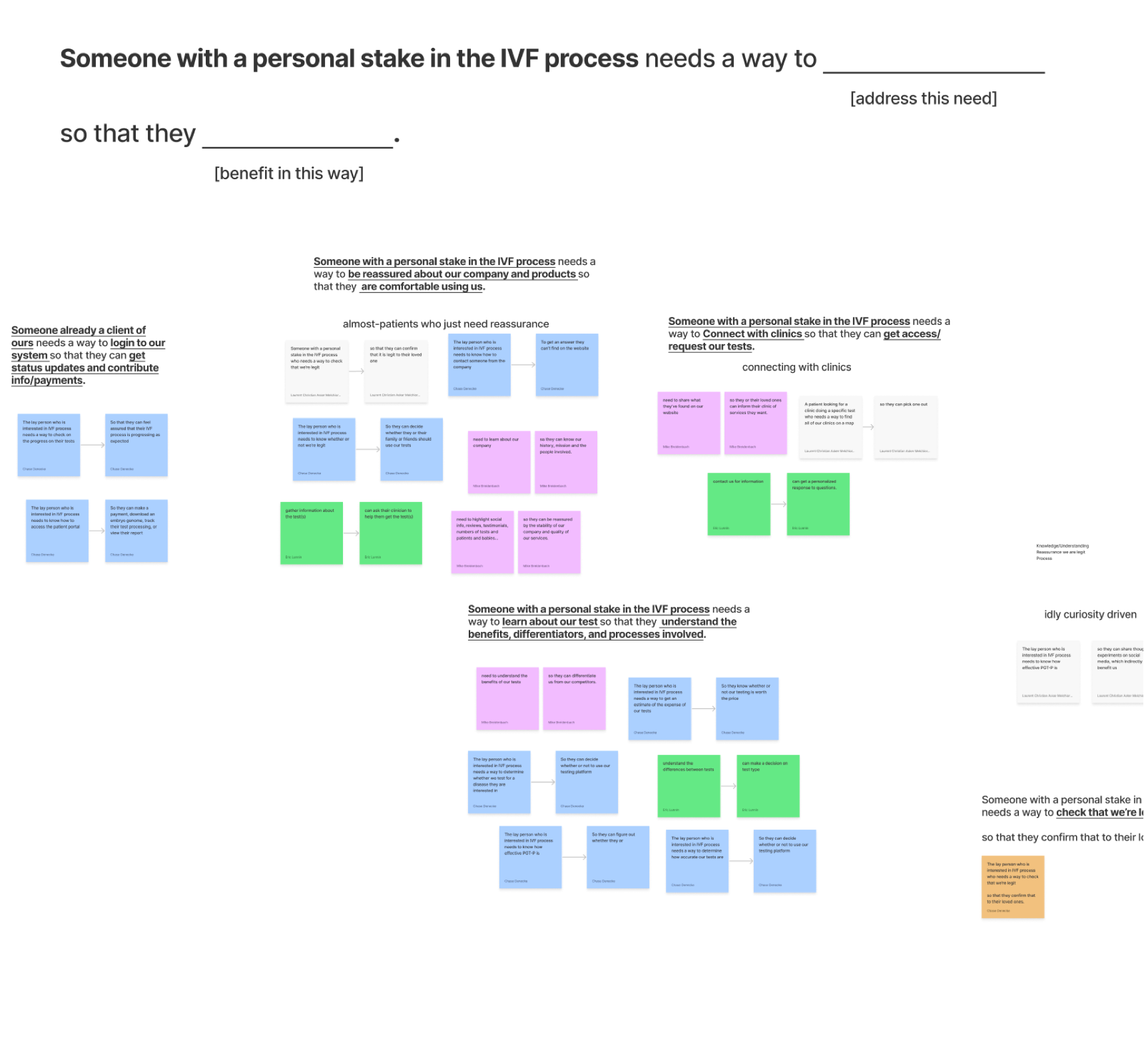
Using data from the interviews, I conducted a small workshop to crystalize actionable problem statements summarizing WHO a particular user is, the user's NEED, and WHY it is important to them.
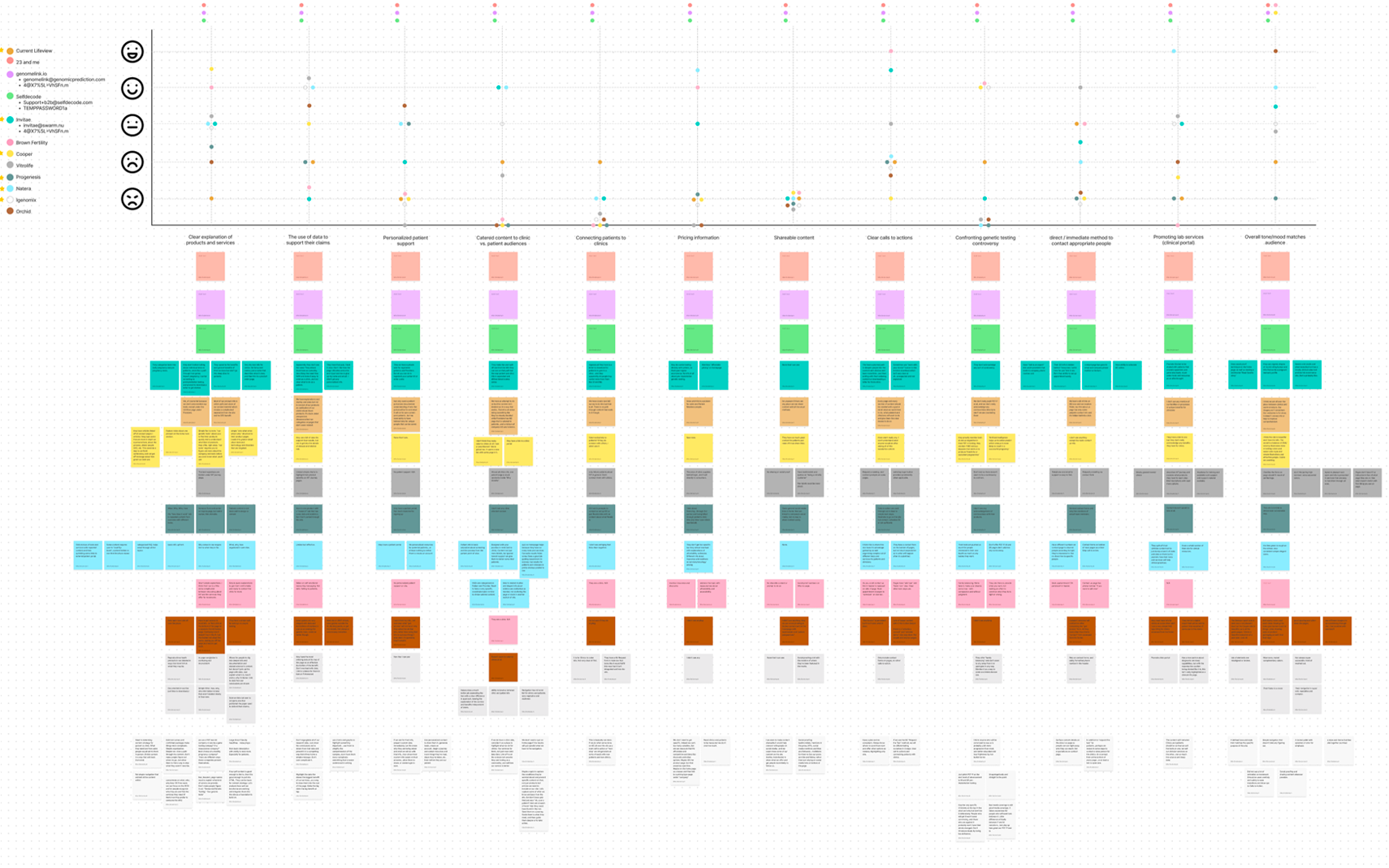
4. Competitive Analysis
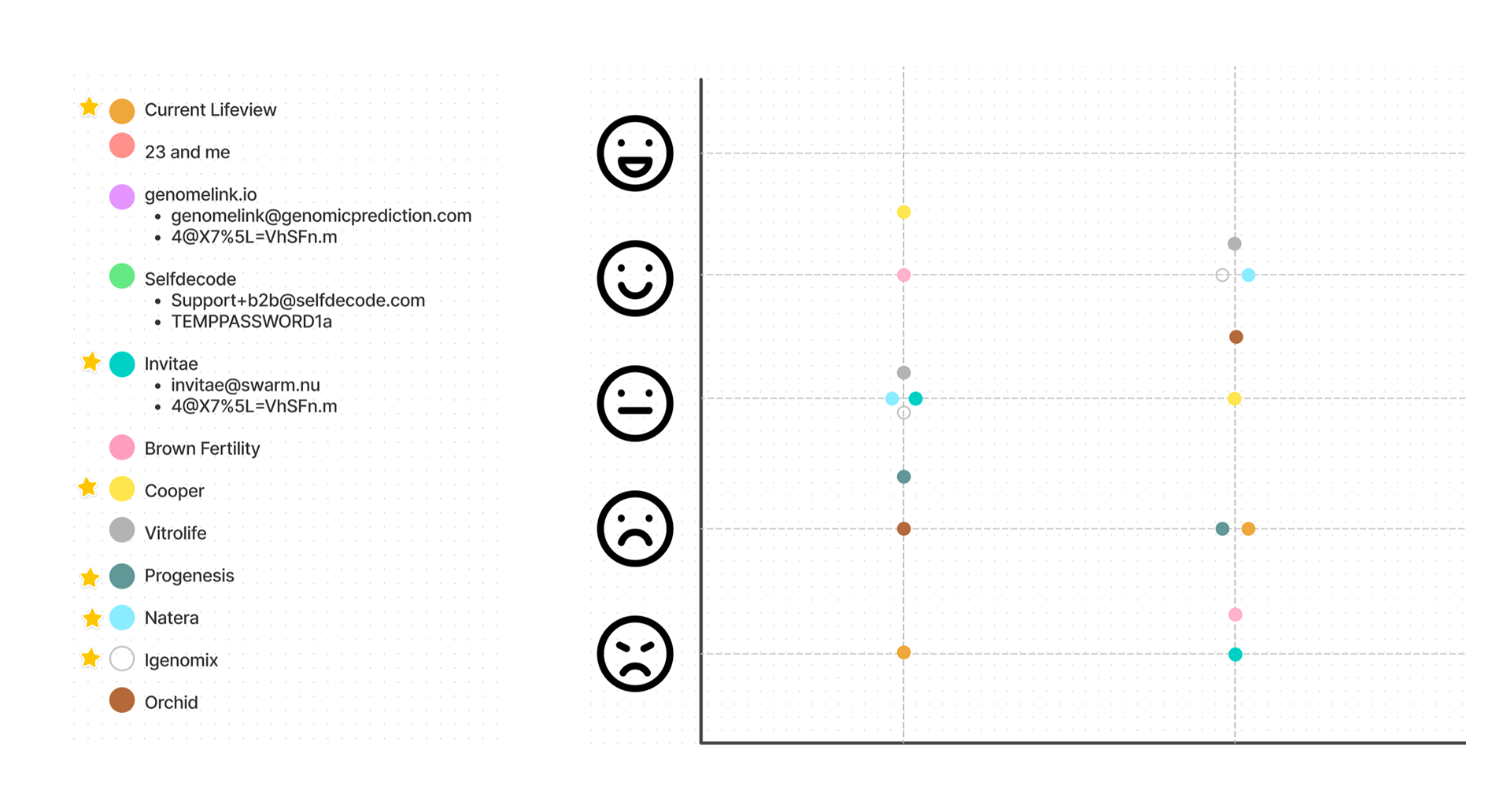
Evaluated competitor sites on how well they addressed our Needs Statements and synthesized our findings – to gain actionable insights and a better understanding of our market, product and business goals.
5. Competitive Analysis Insights
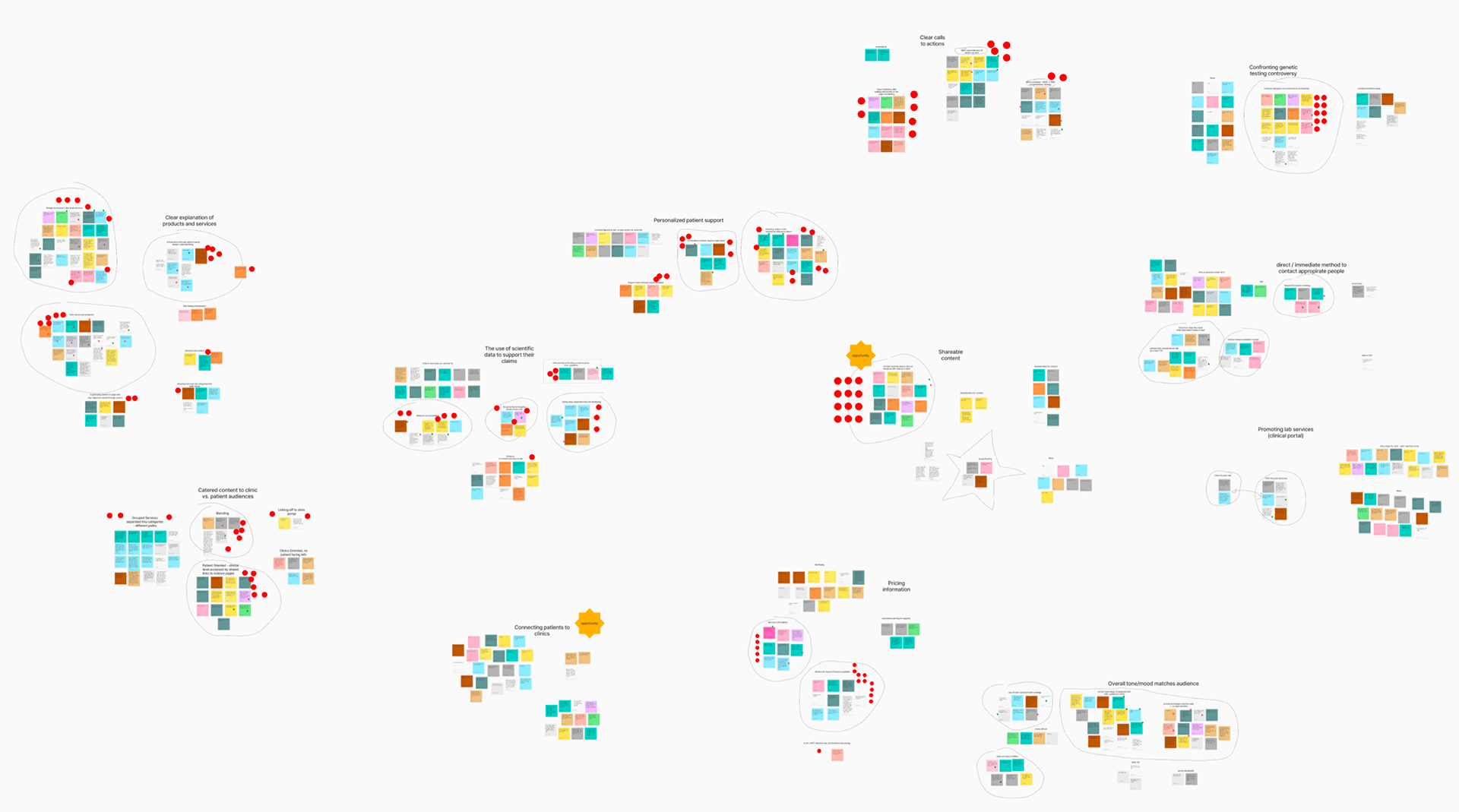
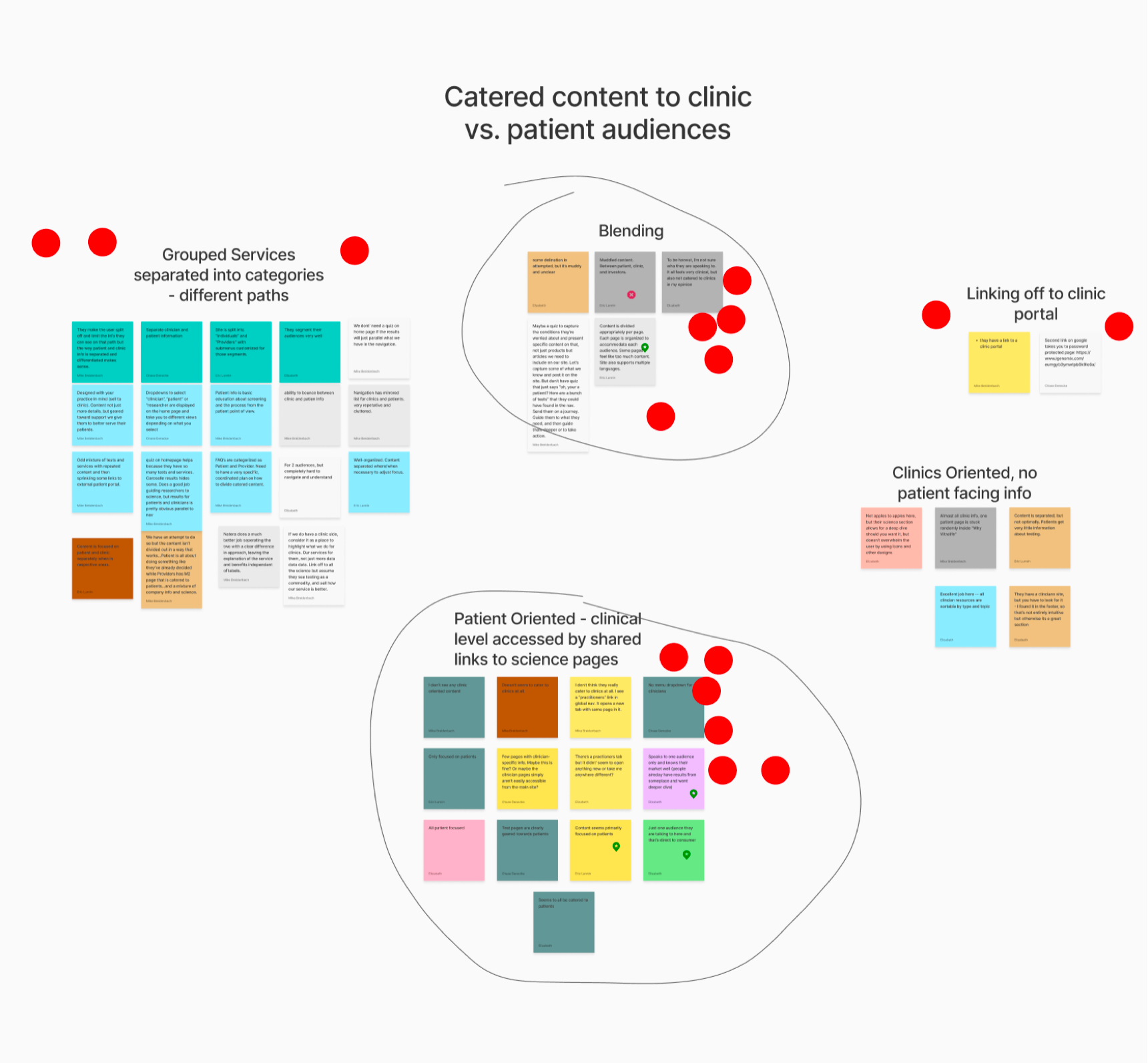
I conducted a workshop where 5 representatives of business, development, marketing and design evaluated the different competitor sites alone and then came together to synthesize our thoughts. This included grouping, theming and dot voting on the biggest risks and greatest opportunities.
6. Card Sorting
A list of topics we knew needed to be included were assembled and different stakeholders were allowed to show us how they would group them. The naming of groups and subgroups was up to them and they were allowed to add and subtract and rename topics as they saw fit.

7. Low to High Fidelity Design
Analysis of everyone's card sorting lead to my building an IA, sitemap, wireframes and content outline as I iterated toward higher fidelity comps.

Used Card Sorting results to begin crafting a sitemap.
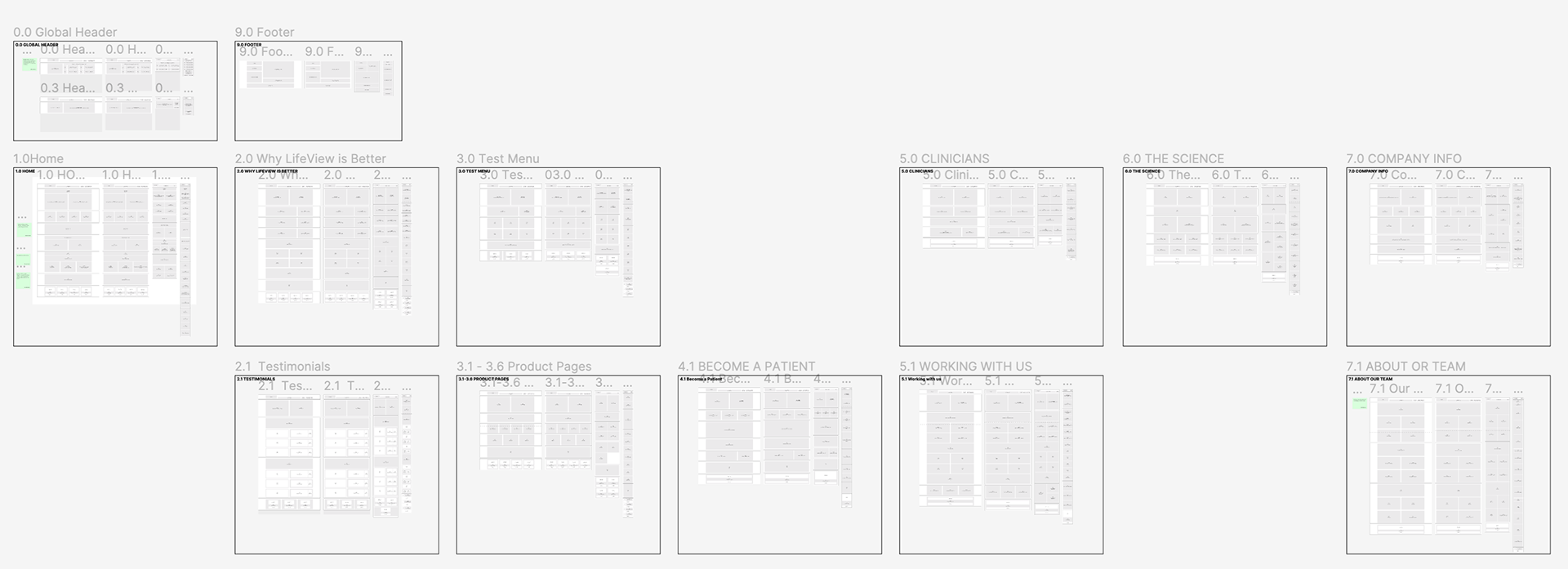
Unique pages were wireframed.
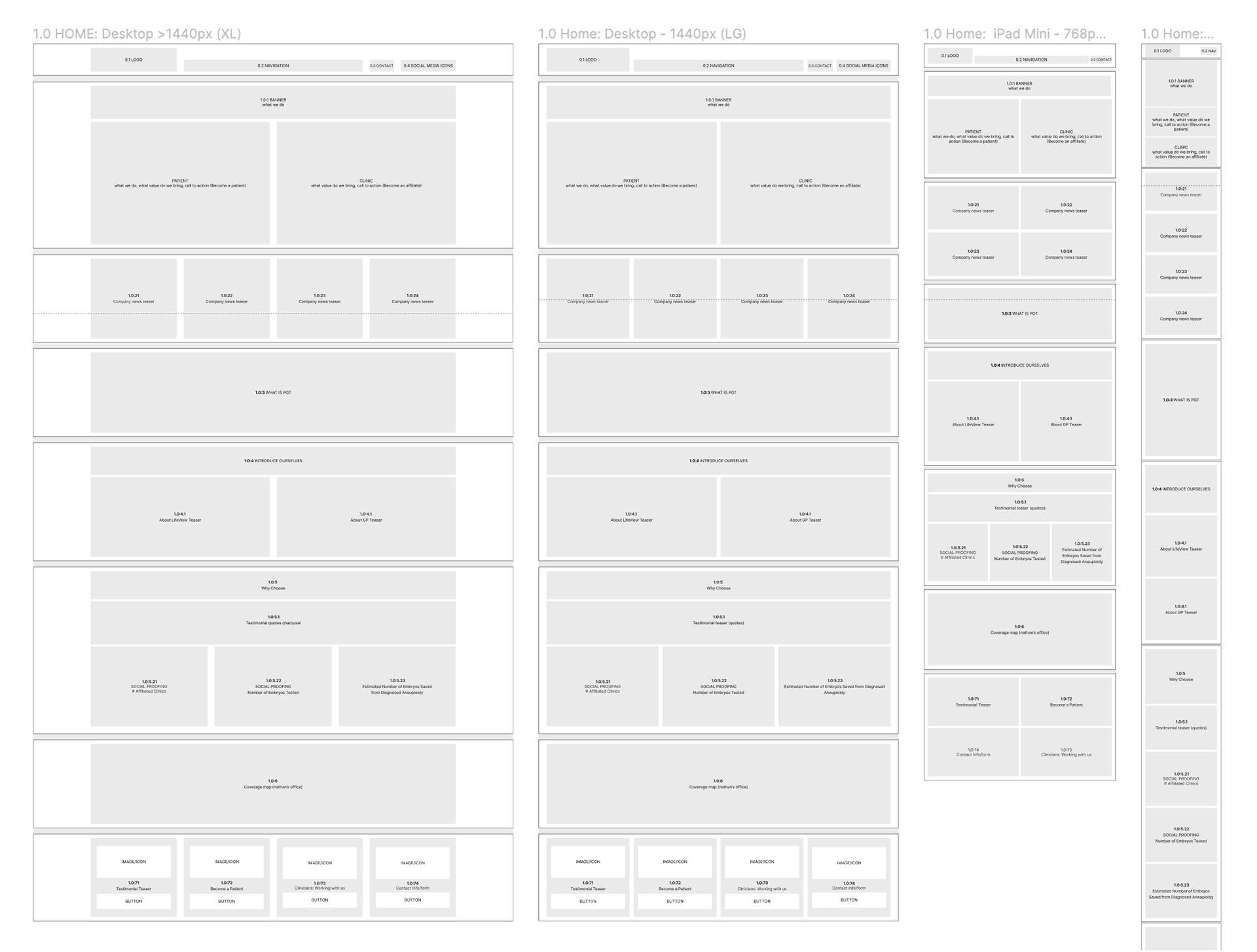
Each page was wireframed at four breakpoints.
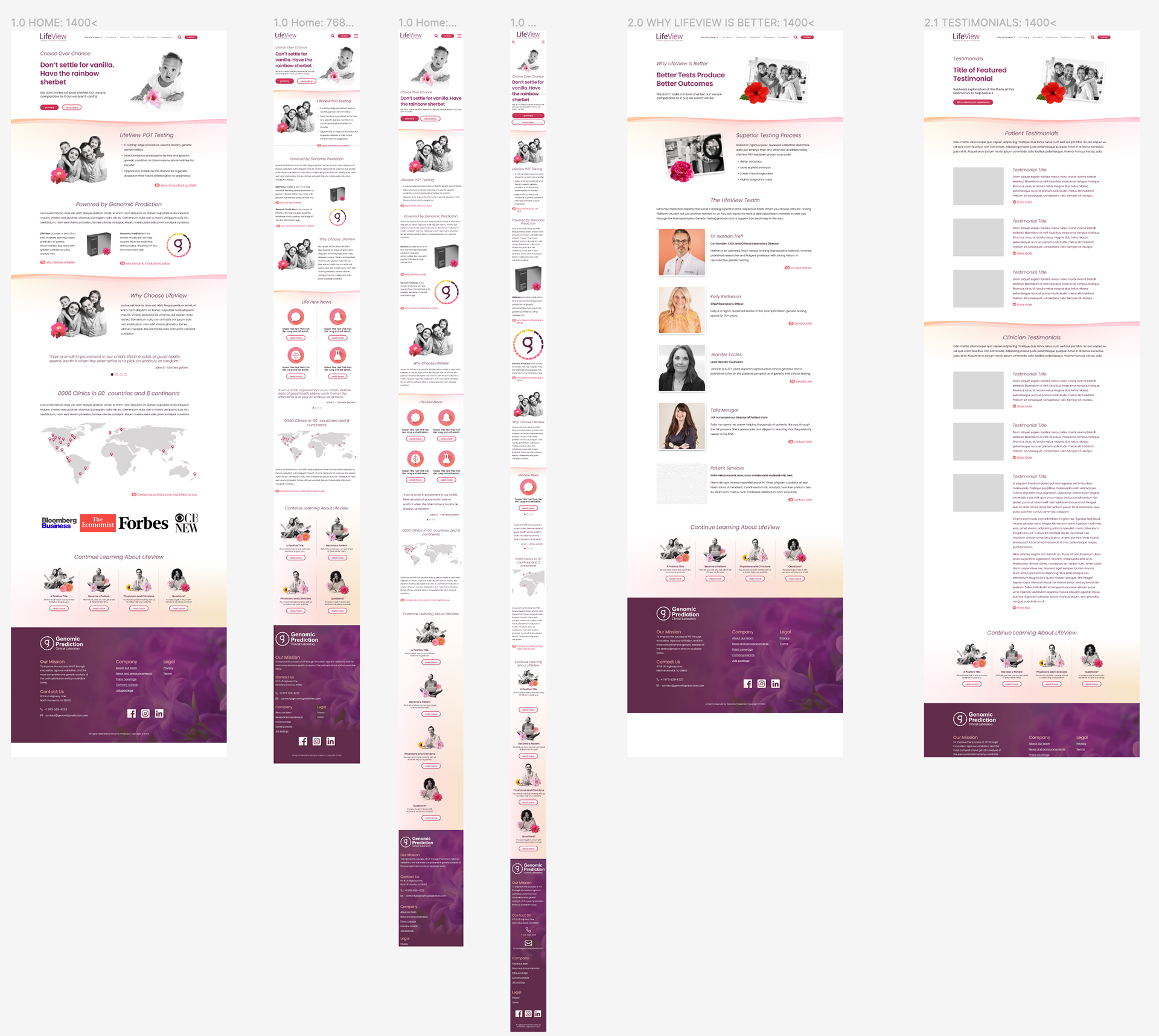
Lower fidelity page designs were begun as content and major components were finalized.
THE RESULT
I left the company before the handoff of final designs. They have a frontend developer who will be dropping in final content into the templates using the style guides I had developed.
Because of my team's careful strategic thought and intension, the new LifeView site can evolve and grow in line with the strategic vision I helped them articulate.